Plottini. From group chat to a shared plan.
An in-house product exploring the gap between “you in?” and a gathering that actually happens. This case study explains who Plottini is designed for, how the problem shapes its features, and how those decisions became a mobile app with a distinct identity.



Weniger
labern.
Mehr raus.
In-house product · Early access
The idea, set in motion.
The brand film translates the product story into motion: scattered messages become an invitation, and suggestions become a shared plan. Paper, cutout lettering and cover artwork connect the individual steps into one continuous sequence.
The film’s visual story
Chat messages and unanswered questions open the film. The image library and an invitation lead into shared planning: choosing an occasion, sharing a link, voting on dates, distributing tasks and keeping track of costs. These are designed example scenes, not evidence of actual gatherings or usage figures.
hast du freitag bock?
ja safe
worauf?
mir egal
…
Freitag, 23:48. Alle zu Hause.“Whatever” is not a day of the week.
The chat scene illustrates the starting problem: people want to meet, but decisions are scattered across messages. Replies, locations and contributions need collecting again afterwards. Conversation keeps moving; a confirmed plan needs its own form.
Why build this app?
Plottini was developed for private gatherings where organising often falls to one person. Its product thesis: a shared plan can make decisions visible and distribute small tasks without turning an evening into an administration project. Invitations, voting and practical details therefore belong to one flow.
Who we designed for.
The person who gets things started.
Hosts need a quick start and a reliable view of replies, open decisions and tasks. They remain responsible for confirming the plan, while participation reduces the need to gather every answer separately.
The people who want a say.
Friends, flatmates and new acquaintances bring different schedules, interests and budgets. Participation needs to be simple enough to begin from a shared link.
Private gatherings with room to change.
Use cases range from brunch and games to club nights and shared event visits. The group is the focus. Professional ticketing and event management are outside the product brief.
The idea first. The details next.
The key flow decision: date and location can remain open when a plan is created. An early draft can become concrete together. The starting point follows the group’s actual situation rather than requiring a finished event plan.
Three decisions that shape the product.
Participation before registration.
Guests open invitations in a browser. Removing a mandatory download and new password is intended to reduce the gap between receiving an invitation and replying.
A shared say. A clear decision.
The group suggests and votes; the host confirms. Separating these roles supports participation while identifying what has actually been agreed.
Anticipation before form filling.
Imagery and voice give an invitation a personal identity early. Expressive design creates anticipation while clear controls keep planning understandable.
Turning the problem into features.

An invitation as a shared reference.
Scattered information is hard to retrieve. A shareable invitation brings occasion, details and replies together. The cover makes it personal; the link makes it accessible.

Voting with a conclusion.
Suggestions only help until a decision is needed. Dates, places and activities can be collected and voted on. Host confirmation separates possibilities from the agreed plan.

Interests beyond a majority vote.
A date does not explain what the group wants to do. Optional interests and preferred energy inform editorial suggestions. Individual preferences are not disclosed to other guests.

Visible responsibility.
Contributions and tasks are easy to lose in conversation. They can be claimed and separately marked done. A commitment is visible without being mistaken for completed work.

Costs before and after.
A rough budget helps with choosing; actual expenses help with settling up. The app separates estimates from paid items and calculates shares. Payments remain outside the app.

Details for the day itself.
Meeting points, access and the journey home often become relevant shortly before the gathering. They remain with the plan rather than needing to be sent again.

Memories with deliberate sharing.
The host can enable a shared album afterwards. Reusing a plan does not carry over replies or pictures. Planning and personal memories remain separate.

Inspiration as a starting point.
Some groups begin without an activity in mind. Preference-based suggestions, researched events and their own links provide options. Plottini organises the visit; tickets and admission stay with the provider.
The flow fits in a pocket.
Mobile use shapes the presentation: an invitation arrives as a link; a reply happens between messages. These views show the entry point and the start of creation. They document the current product rather than embedding a working app.
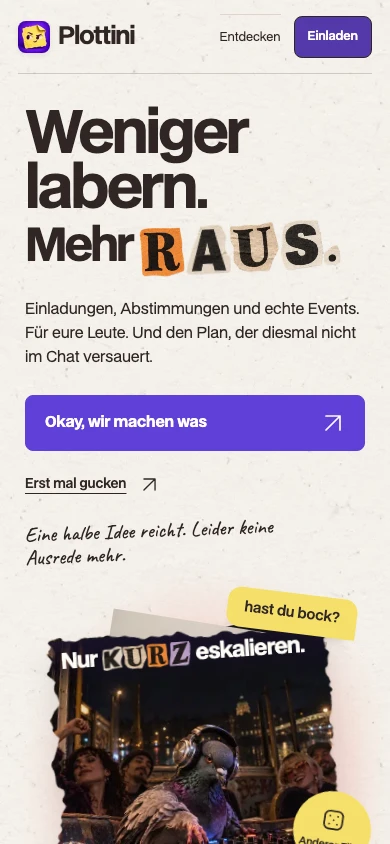
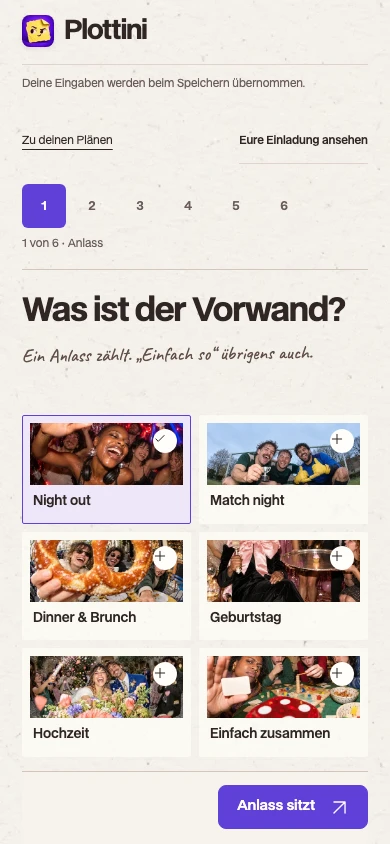
Original mobile app views · German product version
87 covers. One design task.
The cover library serves a product purpose: an invitation should feel like the group sending it. Fisheye, flash, objects and collage span different occasions. The following selection demonstrates the implemented image system, its range, and the relationship between artwork and voice.
Scroll around. Pick an image. Find your scene.
Your invitation could look like this.
Du hast den Link. Praktisch Gästeliste.
Design demo · No plan is created.
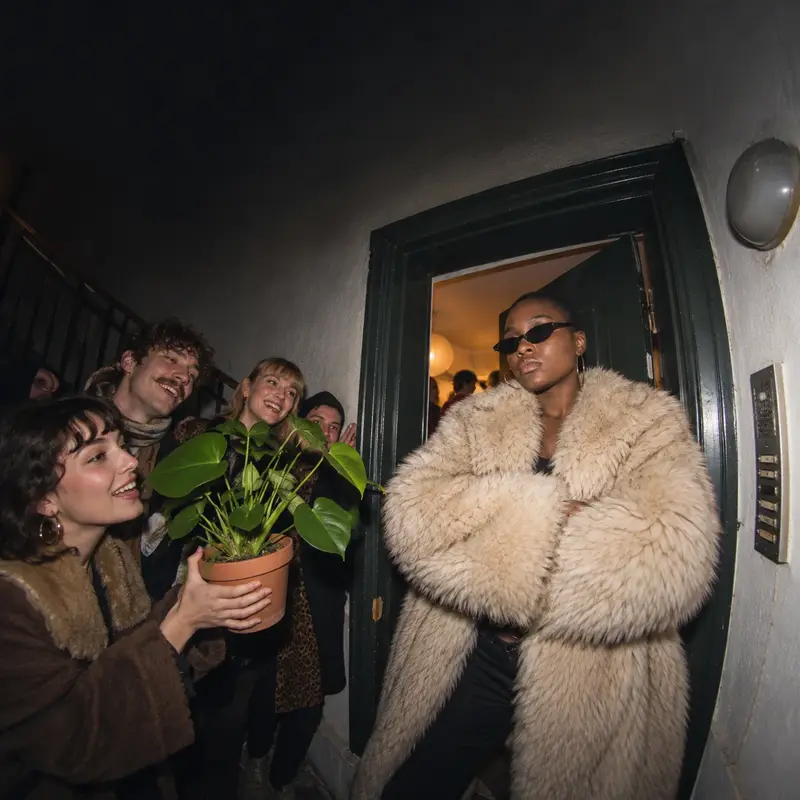
87 original AI-generated Plottini covers. Imagined chaos, not photos of real events.
Making participation tangible.
This simplified model demonstrates a core interaction choice: select an option and move to the next open question. Date and place lead to tasks. Choices stay local and do not create a real plan.
A little group effort. You’ll survive.
When can everyone make it?
Local planning demo. Your choices stay here and are not saved.
A gathering does not end with an RSVP.
Before
Invitations, interests, voting and tasks turn an open idea into a confirmed plan.
During
The meeting point and practical information remain available. The app supports the gathering without needing to become its centre.
After
An album, outstanding costs and plan reuse extend the flow beyond the date itself.
Why paper rather than calendar aesthetics?
The identity follows the setting: personal invitations, private gatherings and anticipation. Warm paper, offset pictures and pointed copy distinguish it from formal organisation software. BDO Grotesk keeps longer text and controls readable; LCT Mogi supplies selective accents. Expressive artwork and functional interface retain different roles.
labern.
Mehr raus.
Simple access involves a trade-off.
Link-based access keeps entry short, but anyone holding a shared invitation link can open it. Host, invitation and participant capabilities are therefore separate. Personal host access can be backed up and restored. The interface needs to explain these differences without overloading the entry flow.
Product status and boundaries
Plottini is in early access. Password accounts and email invitations are not available yet. Anyone with a shared invitation link can open it. Event discovery is a manually researched snapshot, not a continuously updated calendar. Tickets and admission stay with the organiser.
What exists. What still needs evidence.
The app implements a connected flow from an open idea through replies, tasks, costs and memories. This case documents product decisions and the current early-access build. It does not establish that more gatherings happen or that hosts spend less time organising.
Questions for actual use.
- Can a guest distinguish open suggestions from a confirmed plan without explanation?
- Does the group contribute to decisions and tasks, or does the host still do the work?
- Does choosing imagery help people start, or slow them down?
- Can guests find the plan and meeting point quickly on the day?