A direct route from finding dinner to booking it.
We built a restaurant site for Cala Millor around the decisions guests actually make: look at the food, check dietary details, reserve a table or order for pickup. The same product structure supports search visibility and an admin workflow for the team.
The idea behind it.
Someone choosing dinner on a phone makes quick decisions. The site has to create appetite, answer practical questions and make the route to a table or pickup short.
Indian Taj was mainly discoverable through TheFork and Tripadvisor. Those listings helped people find the restaurant, but gave it little room to tell its own story or own the journey from search to table or takeaway.
For people who …
are discovering a restaurant in Mallorca and want to see its food.
need to choose a dish and request a table or collection on their phone.
need to manage menus, reservations and orders in the restaurant.
The last 30 days.
Nov 8, 2026
- Reservations
- 14
- Average guests
- 3.1
- Online orders
- 7
Database totals for a rolling 30-day window; cancelled requests are excluded. These figures describe usage, not a measured conversion uplift.
From first impression to action
Indian Taj connects the emotional choice of where to eat with the practical steps that follow, in German, English and Spanish.
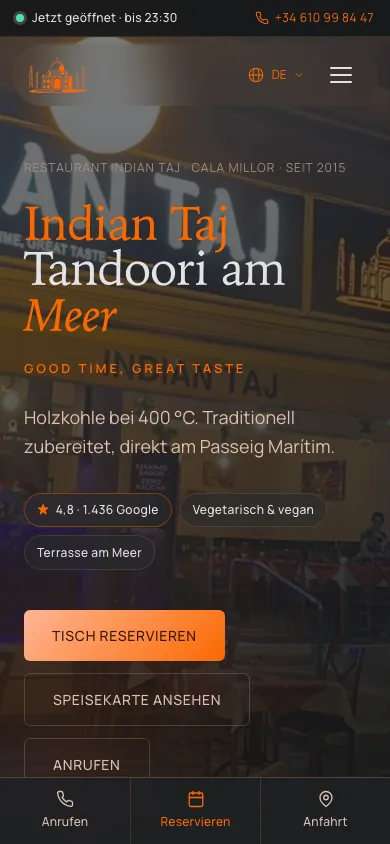
Original German interfaces · captured 31 October 2026
From a first look to a next step.
Choose the place
Real food photography, the restaurant story, location and opening information give Indian Taj an identity beyond a directory listing.
Choose with confidence
The menu spans twelve categories, with images, descriptions, vegetarian and vegan filters, allergens, heat levels and options that make comparing dishes easier on a phone.
Book or collect
The reservation path asks for date, time, party size and contact. Takeaway guests build a cart, choose a pickup slot and place an order on the restaurant’s own site.
A world of its own. With a purpose.
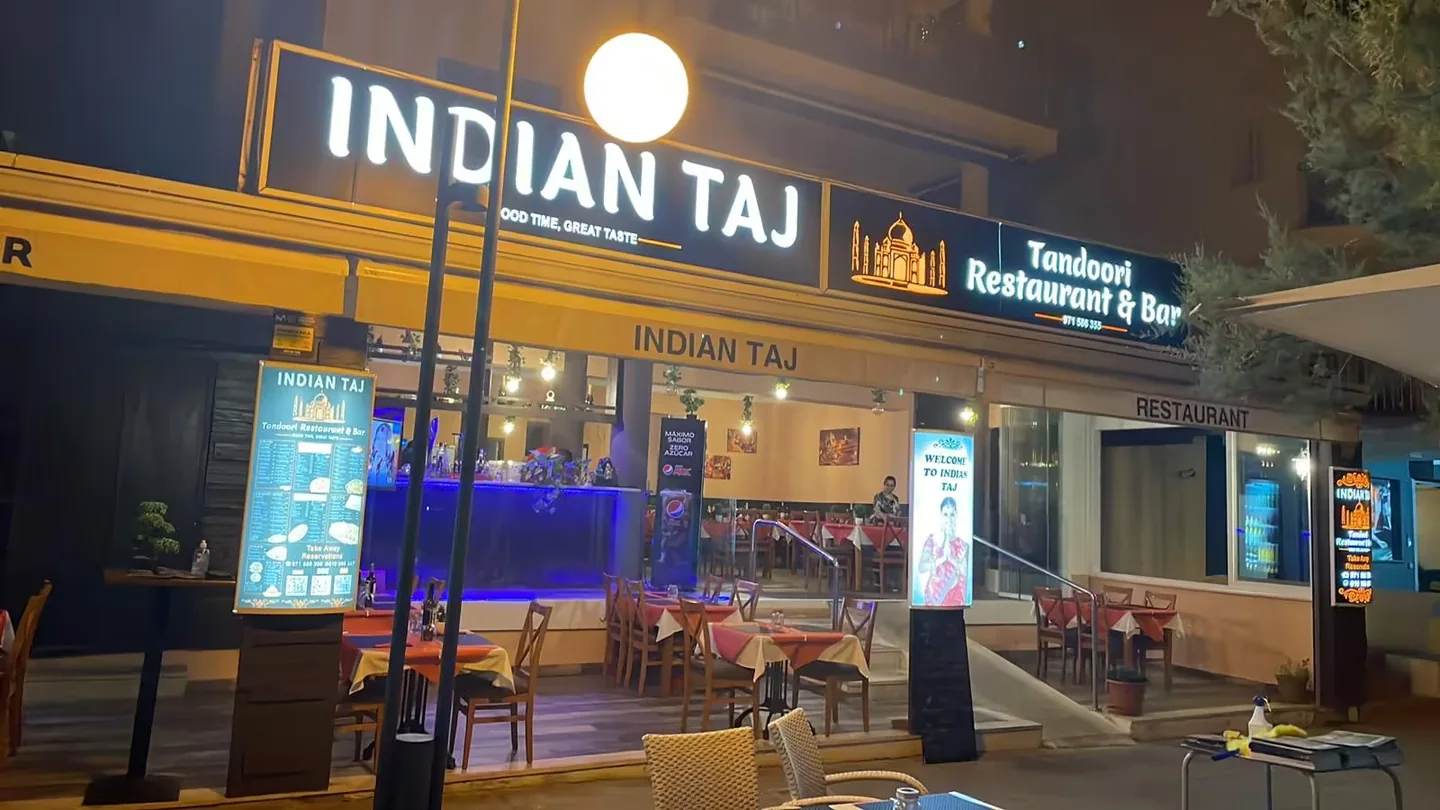
The dark tandoor identity gives real food photography room. Noto Serif, warm neutrals and orange guide appetite into a clear action. The menu becomes denser and more functional while retaining the same visual family through ordering.
The visit starts online. The work continues behind it.
The public website is one side of the product. In a protected workspace the team manages reservations, orders, menu and content. These steps explain the connection; they are not a private admin screen.
- Request or order
- Restaurant workflow
- Response and status
The team gets a working system too
The experience continues after a guest presses send. We built the tools that let the restaurant handle requests and keep its offer current.
- Manage reservations and availability
- Move orders through a status board and open kitchen tickets
- Edit menu categories, options and specials
- Update photography, copy, hours and business details
- Track notifications and failed delivery attempts
- Publish localized content and structured restaurant data
Where it stands.
Indian Taj has a public site and a private restaurant workspace. Only public pages are shown here. When current activity totals are available they come from the operating system and describe usage, not a measured conversion uplift.
What it adds up to.
A guest can now go from finding Indian Taj to choosing a dish, reserving or arranging pickup on the restaurant’s own site. The team has the operational tools to handle what arrives.
Indian Taj owns the route from local discovery to action. The verified 30-day figures above show usage from its operational system, without pretending they prove a conversion increase.